There's a quiet frustration building among retail business owners in Singapore.
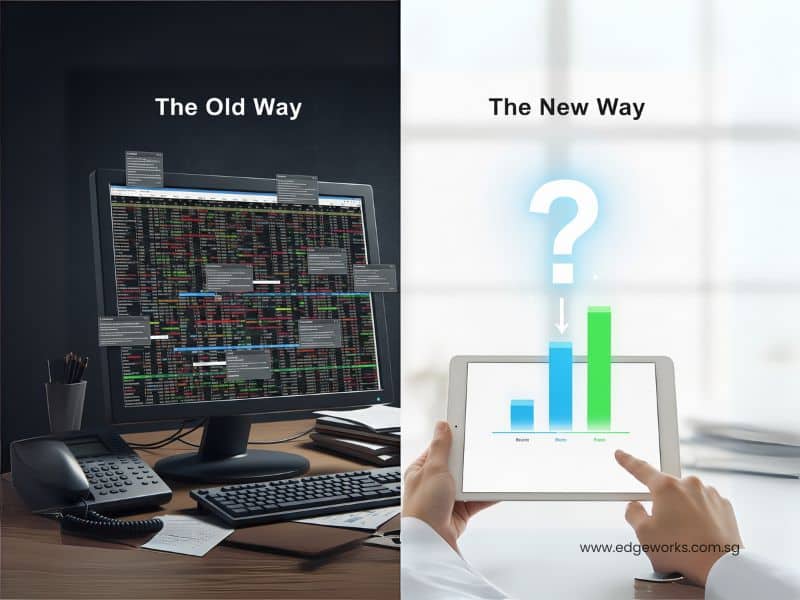
They've sat through the webinars, read the headlines, and heard plenty about how AI is going to change everything. But when Monday morning comes and the store opens, the stockouts are still happening, the loyalty reports are still being pulled manually, and that pile of member data nobody has time to look at is still sitting there.
Knowing AI matters and knowing what to actually do with it are two very different things. Most retailers are stuck somewhere in between.
Where Singapore Retailers Actually Stand
The numbers might surprise you.
According to a May 2026 report by Singapore's Ministry of Manpower, 71.5% of firms have yet to adopt AI. Among the 28.5% that have started, only 3.8% have fully integrated it into core business processes — most are still planning or running limited pilots.
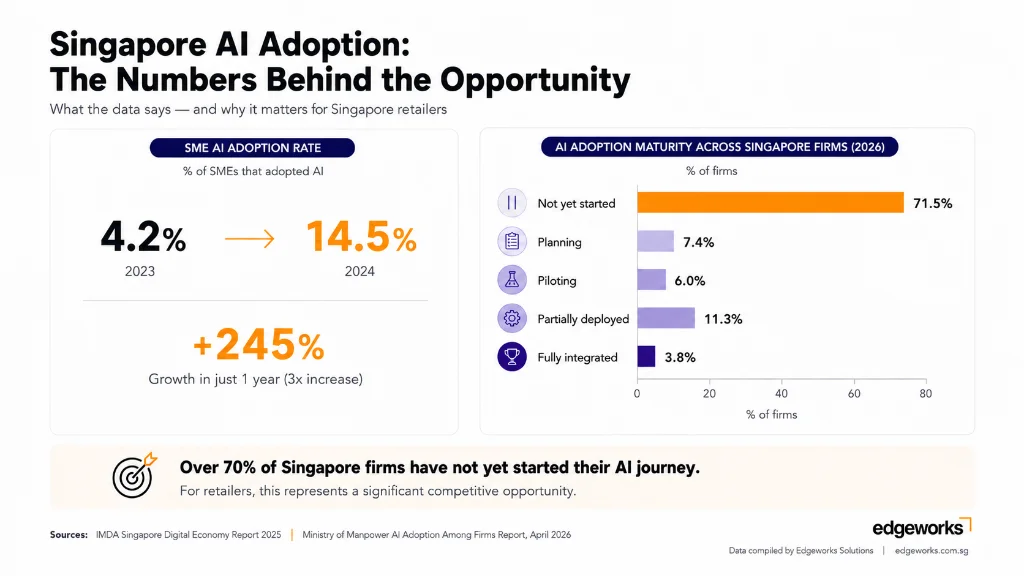
Retailers, in particular, show a pattern worth paying attention to. Among retail businesses that have adopted AI, 71% are still operating at a basic level — the highest concentration of any industry in Singapore.
The government has taken note. In May 2026, Enterprise Singapore and IMDA launched a refreshed Retail Industry Digital Plan to guide more than 2,000 SME retailers beyond entry-level tools and into more advanced, AI-enabled solutions.
Most Retailers Are Using AI — Just Not Where It Counts
Many retailers in Singapore are already using AI daily. Writing social media captions, generating product images, drafting promotional copy — these are real time-savers and there's nothing wrong with them.
But they represent the surface layer, and there's a lot more value sitting underneath. Consider it this way: using AI only for content is a bit like buying a van and only using it to move house once. The capability is there for so much more — you're just not putting it to work.
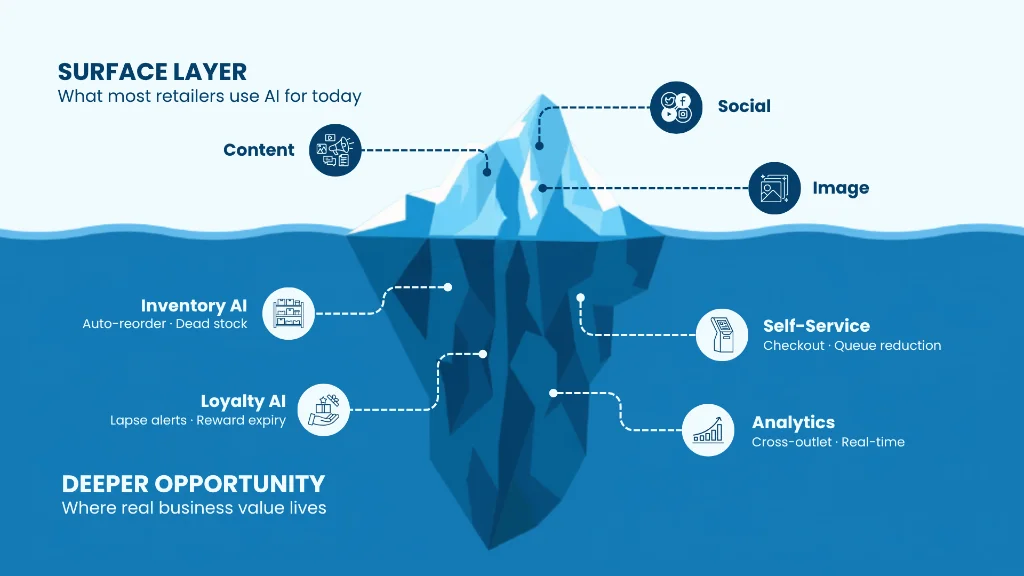
Where AI Can Go Deeper
Inventory: The costs you don't know you're carrying
Most retailers are dealing with two problems at the same time: slow-moving stock quietly tying up cash on shelves, and bestsellers running out before they can restock them. Neither is an operations failure. Both are information failures.
The data needed to prevent these situations already lives inside your POS and inventory system. When AI-powered logic is applied to that data, the system can flag what needs to be reordered before a stockout happens, and surface slow movers before they become dead stock. No data analyst required.
Loyalty: Your members deserve better than a monthly manual export
If you're running a loyalty programme today, there's a good chance someone on your team is regularly pulling spending reports, cross-checking expiring rewards, and filtering for members who haven't returned in 60 or 90 days.
When AI is applied to your loyalty data, the nature of the task changes. Instead of building the report, your team receives the insight — which members are at risk of lapsing, which rewards are about to expire unused, which outlet has stronger retention and what's driving it.
Self-service: Fewer routine transactions, more meaningful customer time
Self-checkout and self-ordering do more than shorten queues. They shift where your staff's attention goes — away from processing transactions and toward the conversations that actually build customer loyalty.
Far East Flora's self-checkout deployment at its Clementi flagship store cut cashier workload by up to 40% and improved waiting times, while AI-assisted marketing tools lifted returns by up to 10% without increasing marketing spend.
Getting Started: A Practical Three-Phase Approach
Most retailers don't get stuck because they chose the wrong tool. They get stuck because they try to do everything at once, or they skip the groundwork that makes everything else work.
Get Your Data in Order — Weeks 1–4
Before AI can tell you anything useful, your data needs to be reliable and connected: POS, inventory, and loyalty on one platform; SKUs categorised consistently; membership cleaned of duplicates. AI tools can actually help with the cleanup itself — flagging duplicate records, identifying inconsistent naming, surfacing incomplete fields.
Let the System Surface the Answers — Weeks 5–8
With reliable data in place, let your system answer the questions your team currently answers manually: What's selling, what's slowing, what needs replenishing? Which loyalty members are lapsing? This is where things shift from reporting to decision support.
Make One Decision Differently — Weeks 9–12
Pick one action and run it deliberately. Send a re-engagement campaign to members who haven't purchased in 60 days. Set auto-reorder rules for your top 30 SKUs. Introduce self-checkout at your busiest outlet. One change, one clear measurement — that's how experimentation becomes evidence.
A Note for Multi-Outlet Retailers
Running more than one location amplifies every gap above. Outlet A is overstocked on a category while Outlet B runs out of the same item. A loyalty member shops across three stores but nobody can see the combined picture. Each manager pulls their own numbers without visibility across the business.
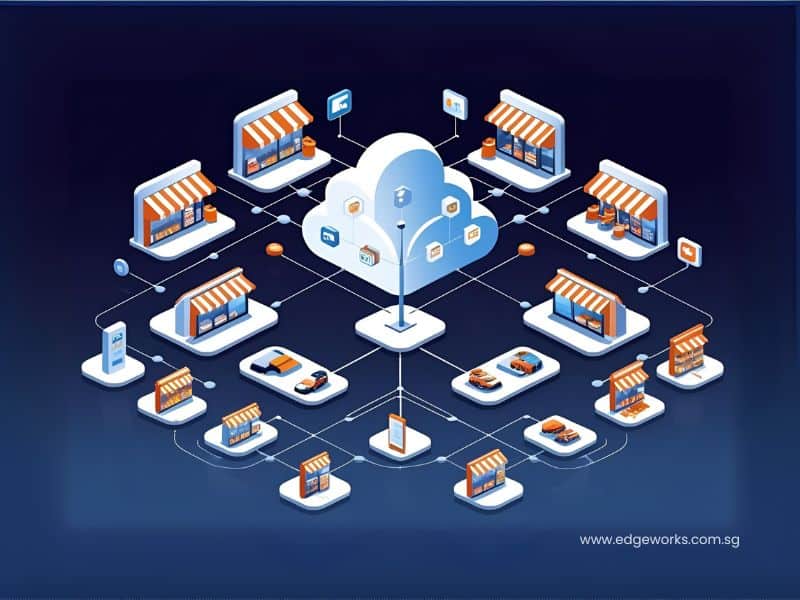
Retailers who manage this well tend to have one thing in common: every transaction, inventory movement, and customer interaction feeds into a single centralised view. Without that foundation, you're not making data-driven decisions. You're making informed guesses — and they get harder to trust as the business grows.
When You Know It's Working
The sign that AI has moved from experiment to part of how you operate is a quiet one. Your team checks the system before deciding what to reorder, not because they were told to but because it saves them from getting it wrong. A re-engagement campaign goes out because the data flagged the opportunity, not because someone remembered to check. Your manager can see across all outlets in one view instead of waiting for end-of-week reports.
None of that feels like a technology transformation when it's working. It just feels like a better-run business.
Let's Talk About Your Next Step
At Edgeworks, we've worked with retailers across Singapore for over 19 years. If you're not sure where to start — or you've already taken some steps and want to go further — we're happy to have a practical conversation. No pitch. Just a look at where your business is today.
Book a Free Consultationedgeworks.com.sg · WhatsApp: +65 9837 6071
Sources
Ministry of Manpower — AI Adoption Among Firms Report, April 2026
IMDA — Singapore Digital Economy Report 2025
Enterprise Singapore & IMDA — Retail Industry Digital Plan Refresh, May 2026
SMEhorizon — Singapore AI Adoption Grows, November 2025
Edgeworks Solutions · For Singapore Retailers · June 2026 · edgeworks.com.sg